
Oil Changes for Classic and Modern Cars

For Modern and Classic Cars

Regular oil changes are the lifeblood of your engine, ensuring it runs smoothly, efficiently, and reliably. Over time, oil breaks down, collects debris, and loses its ability to lubricate vital components. For classic cars, this is even more crucial, as older engines often have unique needs and require specific oils to maintain performance and longevity.

At Restoria, we specialize in oil changes for both vintage classics and modern vehicles. Whether you’re preparing your car for regular use, a show, or storage, our expert technicians understand the importance of using the right oil and performing a thorough service. We’ll check for leaks, assess oil quality, and ensure your engine is ready for the road ahead.

Neglecting an oil change can lead to increased wear, reduced efficiency, and costly repairs. Protect your engine with a service tailored to your car’s specific needs.

Schedule your oil change with Restoria today to keep your vehicle running like a dream.

Get in touch to learn more information about services for your car.
07931 320164

info@restoriaclassics.co.uk

When To Replace Your Brakes

There are a few tell-tale signs that your brakes need replacing. If you’re experiencing any of these, then get in touch for an inspection!

Squeaking or Squealing Noise

If you hear a high-pitched noise while braking, it’s often a sign that your brake pads are worn down and need replacing.

Grinding Noise

A grinding sound indicates that the brake pads have worn down completely, and the metal components are rubbing against the rotors, causing damage.

Vibration When Braking

If you feel vibrations or pulsations when applying the brakes, it could mean that the brake pads are unevenly worn or the rotors are warped.

Longer Stopping Distance

If your car is taking longer to stop than usual, it’s a sign that your brake pads are not functioning properly.

Brake Pedal Feels Soft or Spongy

This could indicate a problem with the brake pads, fluid, or calipers and should be inspected immediately.

Get your car back to mint condition

With rust treatment, panel repairs, or our speciality paint shop.

Get in touch to find out how we can help.

Brake Pad Inspection Process

Regular brake pad inspections are crucial to ensuring your brakes are working effectively. During a brake pad inspection, we follow a meticulous process:

  1. Visual Inspection: Our technicians visually inspect your brake pads to check their thickness and condition. If the pads are worn down to 3mm or less, they are considered unsafe and need replacing.
  2. Rotor Examination: We inspect the brake rotors (discs) for signs of wear, grooves, or warping, as damaged rotors can impact brake pad performance.
  3. Caliper Functionality: We check the calipers to ensure they’re functioning properly, as faulty calipers can cause uneven brake pad wear.
  4. Brake Fluid Check: We also inspect the brake fluid, as low or old fluid can affect braking performance.

Brake Pad Replacement Process

When it’s time to replace your brake pads, here’s what you can expect from our service:

  1. Wheel Removal: We begin by safely lifting your car and removing the wheels to access the brake components.
  2. Removing Old Brake Pads: The worn brake pads are removed from the brake calipers, and we inspect the calipers, rotors, and hardware for any signs of wear or damage.
  3. Installing New Brake Pads: We install high-quality, manufacturer-recommended brake pads that are specific to your vehicle. For classic cars, we use pads that match original specifications or provide modern equivalents.
  4. Reassembling & Testing: After reassembly, we perform a thorough brake test to ensure everything is functioning properly and that your vehicle is safe to drive.

What Happens If You Don't Replace Brake Pads

Neglecting to replace worn brake pads can lead to several serious problems, including:

  • Damage to Rotors: When brake pads wear out, the metal backing plate can grind against the brake rotors, causing significant damage that may require costly rotor replacement.
  • Loss of Braking Power: Worn brake pads lead to reduced braking efficiency, increasing the risk of accidents.
  • Increased Repair Costs: Failing to address brake pad issues early can lead to more extensive and expensive repairs down the line, such as replacing the rotors, calipers, or brake lines.
  • Potential Brake Failure: In extreme cases, neglecting brake maintenance can lead to complete brake failure, which is highly dangerous.

Additional Car Services

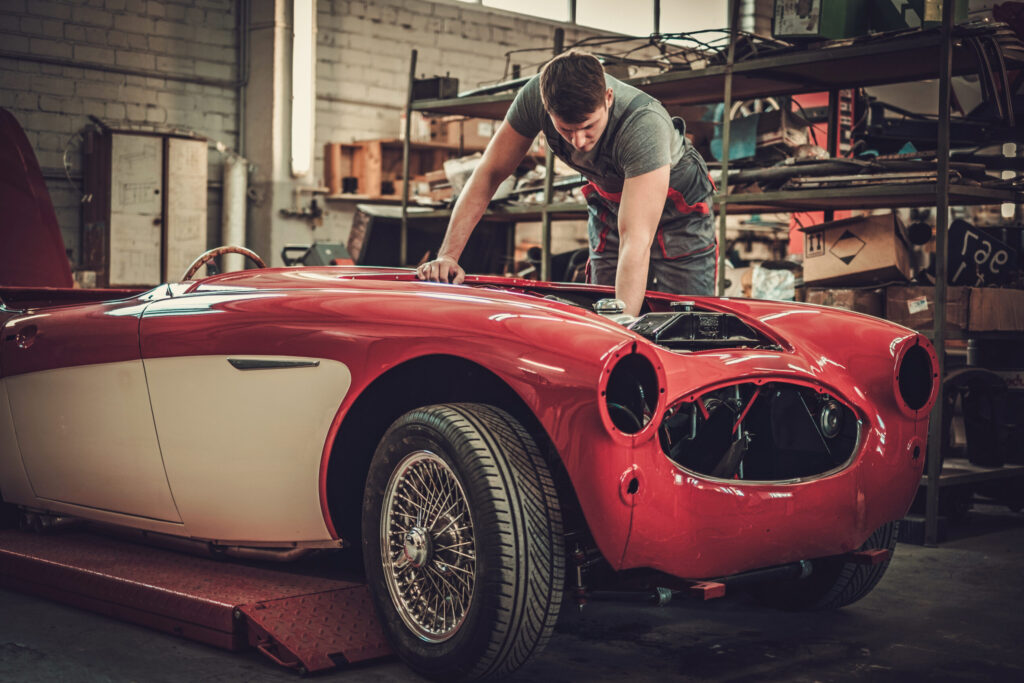
At Restoria, we offer a range of services that keep your classic car on the road and looking good. If you need more than just your car resprayed, then you’re in luck. Our on-site body shop offers everything from fabrication to chassis repair, to MOT preps for this specialised machinery.


Restorations

This is our bread and butter.

We’re proud of our ability to turn a piece of scrap metal into a good-as-new car. We’ve done everything here; complete restorations starting from bare rusty shells, engine rebuilds, reupholstering, welding and fabrication; you name it.

Learn more about our restorations here.


Build To Order

If you’re one to go against the grain and get what you want – even if it’s not on the shelf – then this is for you.

Our build-to-order service allows you to build your dream classic car from the ground up. You choose the vehicle model and all the specifications that suit your interests. We source the materials, vehicle, paint, and everything else needed to build the car of your dreams.

Our team is skilled in recreating classic cars so that they look fresh out of the factory.

Learn more about build-to-order cars here.


Servicing

Perfect for check-ins and routine maintenance. Bring your car in for basic servicing to make sure it’s healthy and road-ready. We’ll help you determine if there’s anything within the car’s bodywork that needs a little TLC.

We also offer MOT prep, rust treatment, engine maintenance, and panel fabrication – all tailored to you.

So what are you waiting for? Check it out.

FAQs

Replacing brake pads typically takes 1 to 2 hours depending on your vehicle’s make and model. This includes the inspection, removal of old pads, installation of new ones, and final testing.

So what are you waiting for? Get in touch to see what we can do!

The lifespan of brake pads depends on factors like driving habits, the type of vehicle, and the quality of the pads. On average, brake pads should be replaced every 25,000 to 70,000 miles. Drivers in urban areas with frequent stop-and-go traffic may need to replace them more frequently than those who drive mainly on highways.

Brake pads are a critical part of the braking system. When you press the brake pedal, hydraulic fluid causes the calipers to squeeze the brake pads against the spinning rotors (discs), creating friction. This friction slows the wheels and eventually stops the car. The brake pads are designed to wear down over time, and when they do, they must be replaced to maintain effective braking.

Brake pads are flat, rectangular components made from materials like semi-metallic, ceramic, or organic compounds. They are mounted inside the brake calipers and are responsible for creating the friction needed to stop the vehicle. High-performance cars, like classic British sports cars, often require specific brake pad materials to optimize braking efficiency and heat dissipation.

The cost of replacing brake pads varies based on the type of vehicle, the quality of the pads, and labor costs. On average, brake pad replacement costs range from £100 to £300 per axle for modern cars. For classic or performance cars, prices can be higher depending on the parts used. Our restoration services ensure that the right brake pads are used for your specific vehicle, whether it’s a classic or modern car.

  • Driving Style: Aggressive driving with frequent hard braking can wear down pads quickly.
  • Road Conditions: Driving in heavy traffic with stop-and-go conditions can increase brake pad wear.
  • Brake Quality: Low-quality or incorrect brake pads may wear out faster than high-quality, OEM-approved ones.
  • Weight of the Vehicle: Heavier vehicles, or those frequently carrying heavy loads, can put more strain on brake pads.
  • Poor Maintenance: Failing to maintain the braking system, including brake fluid changes and rotor checks, can lead to faster brake pad wear.