
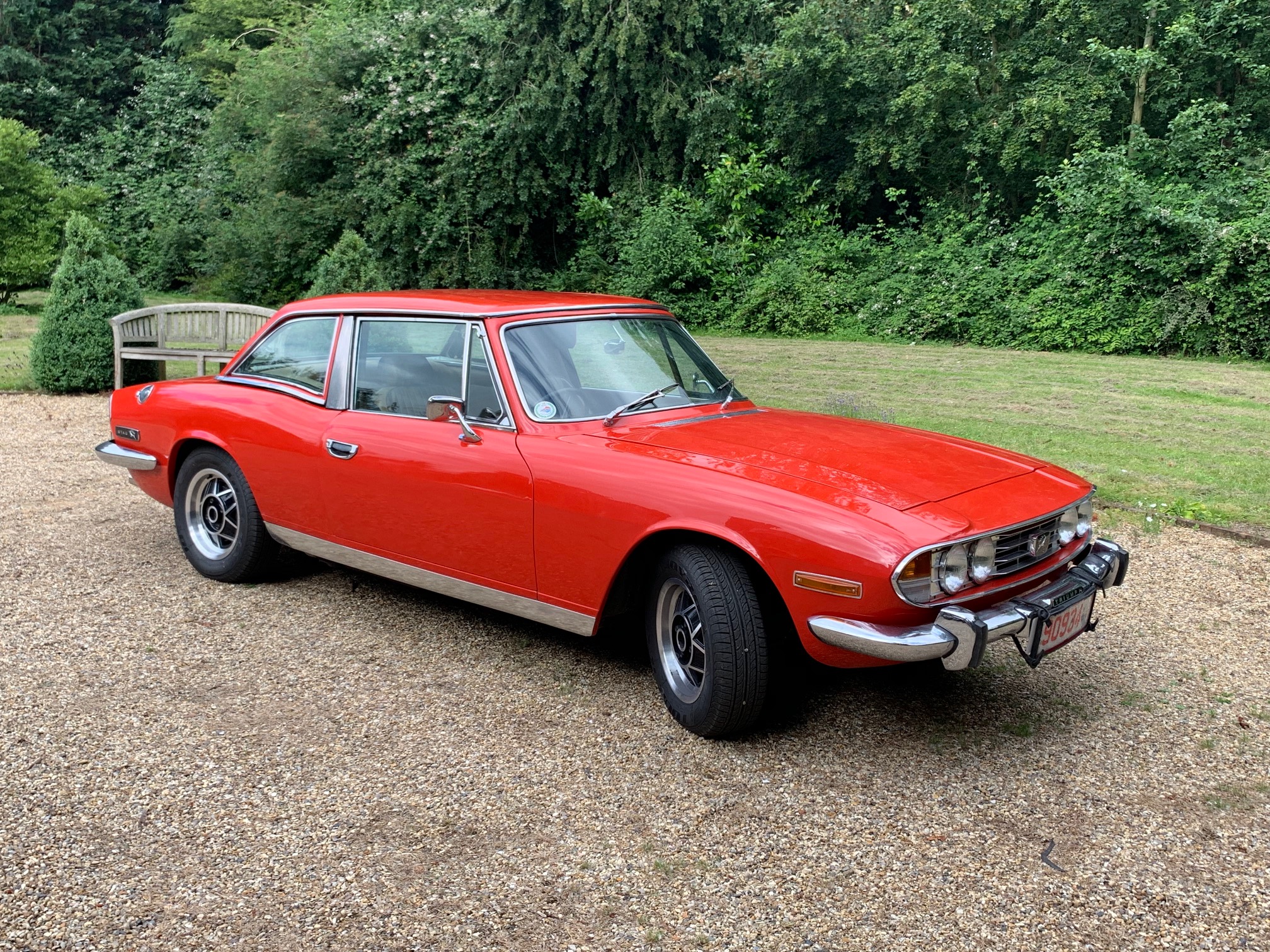
A Guide to Classic Cars: Triumph Stag
Triumph Stags have remained a popular choice for classic car lovers. This is largely thanks to its blend of classic British heritage and American muscle car aesthetics. Triumph Stags can be divisive amongst the classic car community though. Those who love Triumph Stags, absolutely love them! It’s easy to see why as well. They’re incredible looking cars and are as stylish today as they were in the 70s. With the right restoration work, they’re a dream to drive. Check out this Triumph Stag restoration case study we worked on to see what we mean! Our customers loved the end result so much it’s now become their daily driving car.
However, some refuse to touch a Triumph Stag because of the, partially unfair, reputation their original engine has cultivated. However, with the right restoration work, you don’t need to worry. Neglected Triumph Stag engines can cause problems due to rust but all it requires is some planning and maintenance. You can either maintain the existing engine or look at a rebuilt V8 engine.
All classic car lovers know that classic cars need a little extra love and work than modern cars, but they’re well worth the investment.
Where were Triumph Stags built?
There wasn’t actually an original plan to mass-produce the Triumph Stag. Instead, the first Stag was designed and created from a donated Triumph 2000. In 1964, Italian car designer Giovanni Michelotti asked Triumph’s design chief Harry Webster if he would donate a used Triumph 2000 to him. Michelotti’s aim was simple, to create an incredible one-off motor show special that would showcase his design talents.
Webster loved the design so much, he persuaded Triumph to build the Triumph Stag and make it part of their offering. Michelotti went on to design for Ferrari, Maserati and continued to work with Triumph.
What year did the Triumph Stag come out?
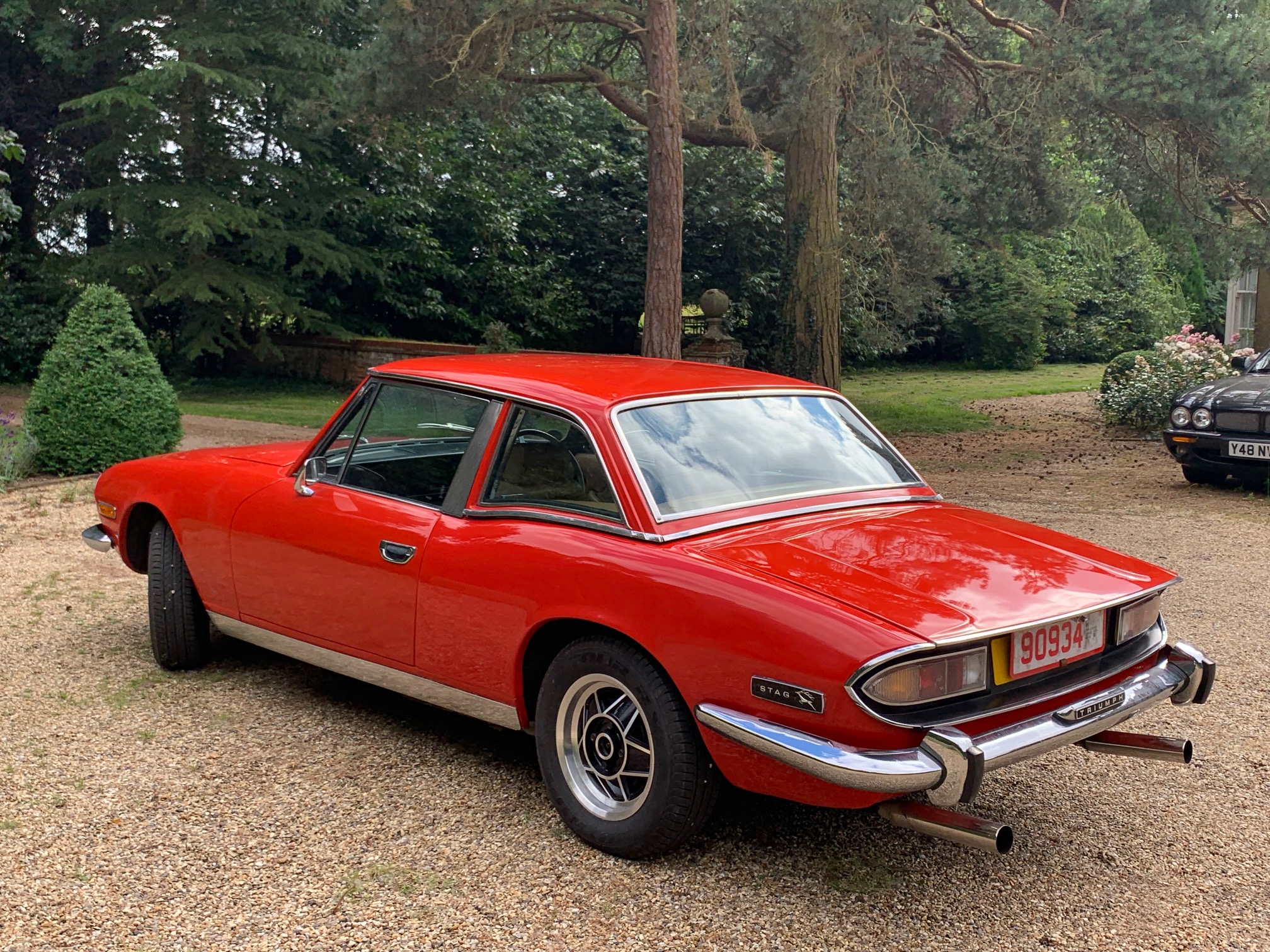
While initial designs for the Triumph Stag began in 1964, it wasn’t launched until 1970. It received a huge amount of positive publicity as buyers loved the simplistic design and the musical rev of the engine.
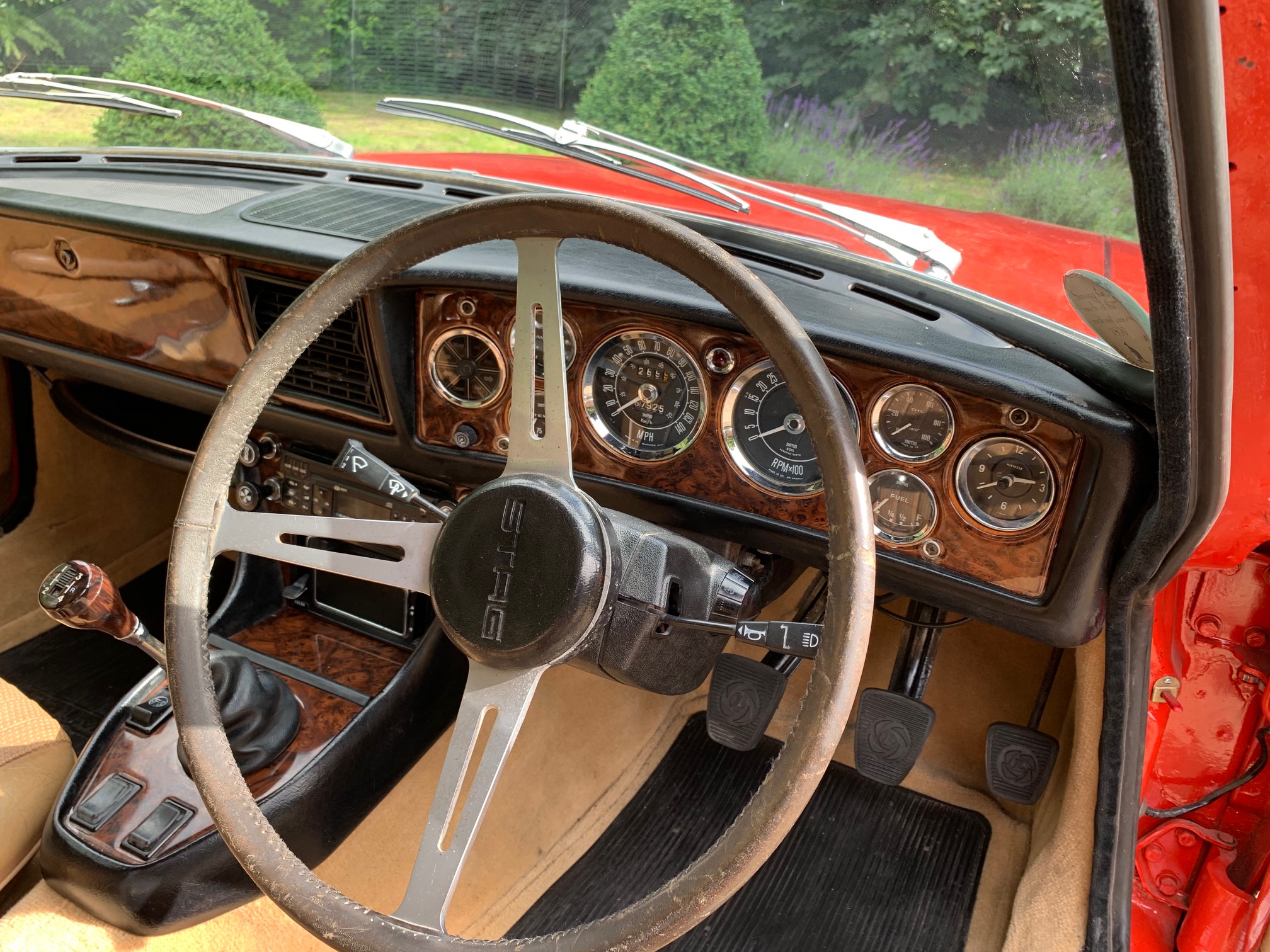
The performance was well-received by customers, with the 2996cc engine’s 145bhp maximum power output slightly outpacing the Triumph Rovers 3528cc engine which offered 143bhp. The press, however, was slightly less favourable. William Boddy, Motor Sport’s editor, said “Although the stag is outpaced by all the comparable GT cars…. It someone feels faster than it is and decently disposes, smoothly and quickly, of slower-moving traffic. In fact, a 0-60mph time of 10.7 seconds and a standing start ¼ mile time of just under 18 seconds is not impressive for a 1970 3.0 litre car; the product of 145bhp puts the Stag in the fast tourer rather than GT category.”
Interestingly, even when being criticised, people couldn’t help but compliment the style and driving experience of the Triumph Stag.
How many Triumph Stags were built?
The Triumph Stag was manufactured between 1970 and 1977 with a total of 25,877 being built. It’s believed around 3,000 of these were sold across the pond in the U.S.
How many Triumph Stags are left?
Though it’s hard to say exactly how many Triumphs are left in the world, the estimated figure is around 46% of the UK production, and 35% of the worldwide production, according to Stag Owners Club.
Of the remaining Stag’s, the vast majority are either white, red or blue.
What is the best Colour for a Triumph Stag?
The colour of a classic car can massively impact its value, we discuss this in our guide to painting a classic car. In the 70s, when the Triumph Stag was first released, there were a few bold colour choices, like Magenta and Topaz, but collectors don’t tend to be interested in these shades. While they fitted the time, they’re seen as brash by today’s standards. Of course, if resale value isn’t that important then be as bold as you’d like! You can always repaint a car to a more muted colour when it comes time to sell.
If you want to still embody the vibe of the 70s but keep a modern style, you could try shades like Russet Brown and Mimosa Yellow. While colours like Carmine Red and White aren’t of the time, they do remain a popular colour choice for restored Triumph Stags.
Who drove a Triumph Stag?
One reason Triumph’s have remained so popular with classic car collectors is their continued use in movies and films! In fact, the Triumph Stag is even a Bond car! Sean Connery’s 007 drove a Triumph Stag in 1971’s classic Diamonds are Forever.
Triumph has been featured in a number of Bond films actually, with Sean Connery driving a Triumph Herald in 1962’s Dr No.
Is a Triumph Stag a good investment?
According to Drive Tribe, Triumph Stags are growing in popularity and price. In 2011 you could pick up a Triumph Stag for just £5,000 whereas, in 2019, you’d be looking at between £18,000-£22,000.
Of course, there are many factors to consider when it comes to price including the condition of the car and its history.
Does triumph still make cars?
British Layland stopped producing Triumph cars in 1981. Currently, the Triumph name is owned by BMW who purchased it in 1994. There have been rumours of a Triumph revival, but BMW has yet to comment on any of them.
Are MG and Triumph the same?
MG & Triumph actually had somewhat of a rivalry in the 1950s. MG Car Company was formed in 1930, as an offshoot of Morris Garages and in the 1940s, they began selling in the United States. Throughout the 50s, they had competition from a number of British competitors including Jaguar, Austin Healey & Triumph.
Eventually, MG and Triumph were both purchased by British Leyland. Despite sharing a number of components, they were kept as quite separate entities.
Get in touch with Restoria Classics
Ready to start your own classic car project? Restoria Classics is based in picturesque Norfolk but we work with classic car enthusiasts all over the UK.
Visit our contact page to drop us a message or give us a call. A member of our friendly team is always more than happy to talk cars!