Clutch Replacement

For Modern and Classic Cars

Your car’s clutch is the unsung hero of every journey, seamlessly connecting the engine to the gearbox and enabling smooth gear changes. Over time, wear and tear can take its toll, especially in classic cars, leading to issues like slipping, sticking, or strange noises. Ignoring these warning signs can result in more significant problems down the road—but that’s where we come in.

At Restoria, clutch replacement and repair isn’t just something we do; it’s a craft we’ve perfected. Specializing in classic cars, we understand the unique demands of vintage vehicles and have the expertise to ensure your clutch operates as smoothly as the day it rolled off the assembly line.

Whether you’re restoring a timeless treasure or keeping your everyday classic in peak condition, trust us to deliver precise, reliable solutions tailored to your car’s needs.

Don’t let a worn clutch hold you back—contact Restoria today for expert repairs or a seamless replacement.

Get in touch to learn more information about services for your car.

01508 558817

info@restoriaclassics.co.uk

Why Your Clutch matters

The clutch is vital to the performance of your car, allowing smooth gear changes and optimal power transfer to the wheels. Over time, wear and tear can lead to issues like slipping, sticking, or grinding noises, affecting your vehicle’s drivability. Addressing these problems early helps maintain your car’s performance and prevents costly damage down the line.

Specialist Care for Classic Cars

Classic cars require a skilled touch, and that’s exactly what we provide. At Restoria, we have years of experience working with vintage and modern classics, so we understand the intricacies of their clutches. Whether it’s a repair to restore smooth operation or a full replacement, our team ensures every job is done to the highest standard with parts that match your car’s original quality.

Book Your Clutch Service Today!

If you’re experiencing clutch issues or need a replacement, don’t wait for the problem to worsen. Our specialists are here to help, providing expert solutions tailored to your vehicle’s unique needs. Contact us today to schedule your clutch service and keep your classic running at its best.

Get your car back to mint condition

With rust treatment, panel repairs, or our speciality paint shop.

Get in touch to find out how we can help.

How To Extend The Life Of Your Clutch

A clutch will eventually get worn down and need replaced, though there are a few steps you can take to make sure that you don’t need to visit the shop. As much as we love seeing you, we love seeing people take care of their classic cars even more!

Check out these tips to make sure you get the most out of your clutch between servicing:

  • Don’t rest your foot on the clutch pedal while driving; this can engage the thrust and release bearings prematurely and cause them to wear out.
  • Don’t leave the car in gear with your foot on the clutch at traffic lights, as it strains the clutch components unnecessarily.
  • Don’t hold the car on a hill by slipping the clutch for longer than absolutely necessary during a hill-start; this will wear out the friction surface quickly.
  • Don’t slip the clutch deliberately to avoid changing gears; it’s a sure way to shorten its life.
  • Do release the handbrake gradually with your thumb on the release button as you lift the clutch and press the accelerator to ensure a smooth start.
  • Do ensure there is a little free play in the pedal movement before you start to feel the weight; if there’s no slack, you might need to adjust the cable housing or the clutch rod.
  • Do keep the hydraulic clutch control reservoir topped up to the same level as the brake system’s reservoir to maintain optimal performance.

How Do You Know When Your Clutch Needs Replaced?

There are a few tell-tale signs that your clutch is in need of a check up by a professional. If you notice any of these symptoms, get in touch today and we can sort it out.

Clutch Slip

Symptom: The engine revs up, but the vehicle doesn’t accelerate as expected.

Causes:

  • Worn clutch disc, which can make it difficult to change gear and may lead to slipping.
  • Oil or grease contamination on the clutch disc.
  • Worn pressure plate or flywheel.

Gears Stuck

Symptom: Hard to change gears, especially into first and reverse.

Causes:

  • Clutch not fully disengaging, leading to issues when changing gear.
  • Faulty or worn clutch linkage causing clutch judder, clutch slip, clutch drag, or clutch fierceness.
  • Low hydraulic fluid in the clutch master/slave cylinder.

Grinding Noise

Symptom: Grinding noise when pressing the clutch pedal.

Causes:

  • Worn clutch disc or pressure plate.
  • Damaged or worn-out throw-out bearing.
  • Misaligned clutch assembly.

Burning Smell

Symptom: Burning smell, especially when driving uphill or with a heavy load.

Causes:

  • Clutch slipping due to wear or improper adjustment.
  • Overheating of the clutch components.
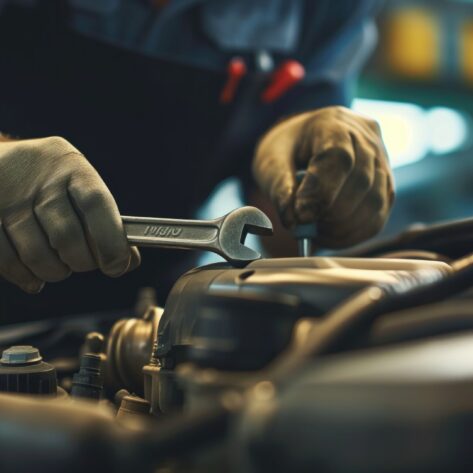
Mechanic Fixing A Car Engine With A Wrench In An Auto Repair Shop. Сoncept Vintage Car Restoration, Expert Mechanics, Classic Automotive Workshop, Precision Engine Repair, Skilled Auto Technicians

Good To Know: Clutch Basics

Components of a Clutch

  1. Flywheel: Attached to the engine’s crankshaft, it rotates with the engine.
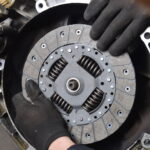
  2. Clutch Disc (Friction Disc): Positioned between the flywheel and the pressure plate, it has a friction surface on both sides.
  3. Pressure Plate: Presses the clutch disc against the flywheel to engage the clutch.
  4. Release Bearing (Throw-out Bearing): Engages and disengages the pressure plate.
  5. Clutch Pedal: Operated by the driver to control the clutch.
  6. Clutch Cable: Assists in pushing the clutch fork forward to disengage the clutch from the flywheel and engine, allowing the driver to change gear.

How the Clutch Works

  1. Engaged Position (Clutch Pedal Released):
    • When the clutch pedal is released, the springs in the pressure plate press the clutch disc firmly against the flywheel.
    • This connection allows the engine’s power to be transmitted directly to the gearbox, moving the vehicle.
  2. Disengaged Position (Clutch Pedal Pressed):
    • When the clutch pedal is pressed, it moves the release bearing.
    • The release bearing pushes against the pressure plate’s springs, lifting the pressure plate away from the clutch disc.
    • This action disengages the clutch disc from the flywheel, interrupting the power flow from the engine to the gearbox.
    • This allows the driver to change gears without causing damage to the transmission.

Process of Changing Gears

  • Press the Clutch Pedal: Disengages the clutch, interrupting power flow.
  • Shift the Gear: With the power flow interrupted, the gears can be changed smoothly.
  • Release the Clutch Pedal: Re-engages the clutch, restoring power flow from the engine to the gearbox.

It’s important to consider the cost and quality of a clutch kit when replacing a clutch, as high-quality replacements can be expensive but are crucial for the longevity and performance of your vehicle. When in doubt, visit a professional.

Role of Friction

  • The friction material on the clutch disc ensures a strong grip with the flywheel and pressure plate.
  • Over time, this friction material wears down, which is why clutches eventually need replacement.

Additional Classic Car Services

At Restoria, we offer a range of services that keep your classic car on the road and looking good. If you need more than just your car resprayed, then you’re in luck. Our on-site body shop offers everything from fabrication to chassis repair, to MOT preps for this specialised machinery.


Restorations

This is our bread and butter.

We’re proud of our ability to turn a piece of scrap metal into a good-as-new car. We’ve done everything here; complete restorations starting from bare rusty shells, engine rebuilds, reupholstering, welding and fabrication; you name it.

Learn more about our restorations here.


Build To Order

If you’re one to go against the grain and get what you want – even if it’s not on the shelf – then this is for you.

Our build-to-order service allows you to build your dream classic car from the ground up. You choose the vehicle model and all the specifications that suit your interests. We source the materials, vehicle, paint, and everything else needed to build the car of your dreams.

Our team is skilled in recreating classic cars so that they look fresh out of the factory.

Learn more about build-to-order cars here.

Servicing by Clutch Specialists

Perfect for check-ins and routine maintenance. Bring your car in for basic servicing to make sure it’s healthy and road-ready. We’ll help you determine if there’s anything within the car’s bodywork that needs a little TLC.

We also offer MOT prep, rust treatment, engine maintenance, and panel fabrication – all tailored to you.

For added convenience and cost-effectiveness, consider our mobile clutch repair services, which allow you to compare and save on clutch repair costs.

So what are you waiting for? Check it out.

So what are you waiting for? Check it out.

FAQs

A clutch is a mechanical device in vehicles that connects and disconnects the engine from the transmission. It allows the driver to engage and disengage the engine to shift gears smoothly, enabling the car to start, stop, and change speeds efficiently. When the clutch pedal is pressed, it disengages the clutch plate from the flywheel, interrupting the power flow from the engine to the transmission.

The lifespan of a clutch varies depending on driving habits and conditions but typically lasts between 50,000 and 100,000 miles. Regular maintenance and avoiding aggressive driving can extend its life.

Premature clutch wear can be caused by:

  • Riding the clutch pedal (keeping the pedal partially engaged while driving)
  • Frequent stop-and-go driving
  • Heavy towing or carrying loads
  • Aggressive driving and rapid gear changes